Posts

Showing posts with the label book design

Webesthetics ©

Image
The art of book making, or of any readable/visual material is about visual interest and ease. I can't count the number of web sites I've visited where the choice of typography and the spacing between lines of type is entirely uninformed, or where the design of the web site is uninformed. The options available for type on this site are limited, also, and that is frustrating. The more we spend time reading things on computers, the more visual ergonomics is going to be a crucial issue. What is wonderful about a two-page book that was well designed was that facing pages were harmonious--so one could read one page without being distracted with what was on the facing page. Furthermore, a two-page book allowed one to have one's eyes shielded by extraneous visual data about one. Not true for web pages, Kindle, or any of the new computer formats. Even if one views things that are set up as a two-page spread, the pages are flatly presented, so visual distraction is easy. Remarkably e...
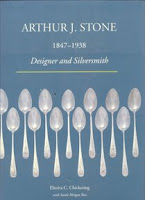
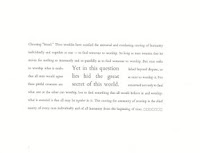
Book Design & Production by Elizabeth Burke

Image
Copyright 1994 Boston Athenaum Library, Boston, MA. Design and production by Elizabeth M. Burke. Copyright 1992 Kenneth Rosen. Designed and edited by Elizabeth M. Burke. Printed at the Ascensius Press, Maine. Other books I've copyedited, designed or produced: Barthel, Diane. The Preservation Project. New Jersey: Rutgers University Press. Germain, Sylvia. The Book of Nights. Boston, MA: David R. Godine Publisher. Kennedy, Rick, ed. Aristotelian and Cartesian Logic at Harvard: Charles Morton's a Logick System & William Brattle's Compendium of Logick. The Colonial Society of Massachusetts Mundy, James. No Rich Men's Sons. Maine: Harp Publications, 1996 Patten, Robert L. George Cruikshank's Life, Times, and Art. Vol 2. New Jersey: Rutgers University Press. Zallen, Doris K. Does It Run in the Family. Consumer's Guide to DNA Testing for Genetic Disorders. New Jersey: Rutgers University Press, 1997.

Book Design 1: Letterpress Printing & Creativity

Image
In 1990, I worked with a letterpress shop and the Portland School of Art, with a group of talented students interested in book design and the old-world art of letterpress. I wanted the students to learn more than skill; I wanted them to try to turn the words of a great mind and soul into something worthy of great skill. The work exhibited in the next two slides shows not only how clever they were individually, but how they inherently, long before the "team" work skills became so prevalent in our US of A, did what could be nothing less than brilliant as a team. I gave the assignment, but they did the work, and it was very fine work.